How to Identify a Watch in a Manga Panel
More actions
Find the panel before choosing the watch
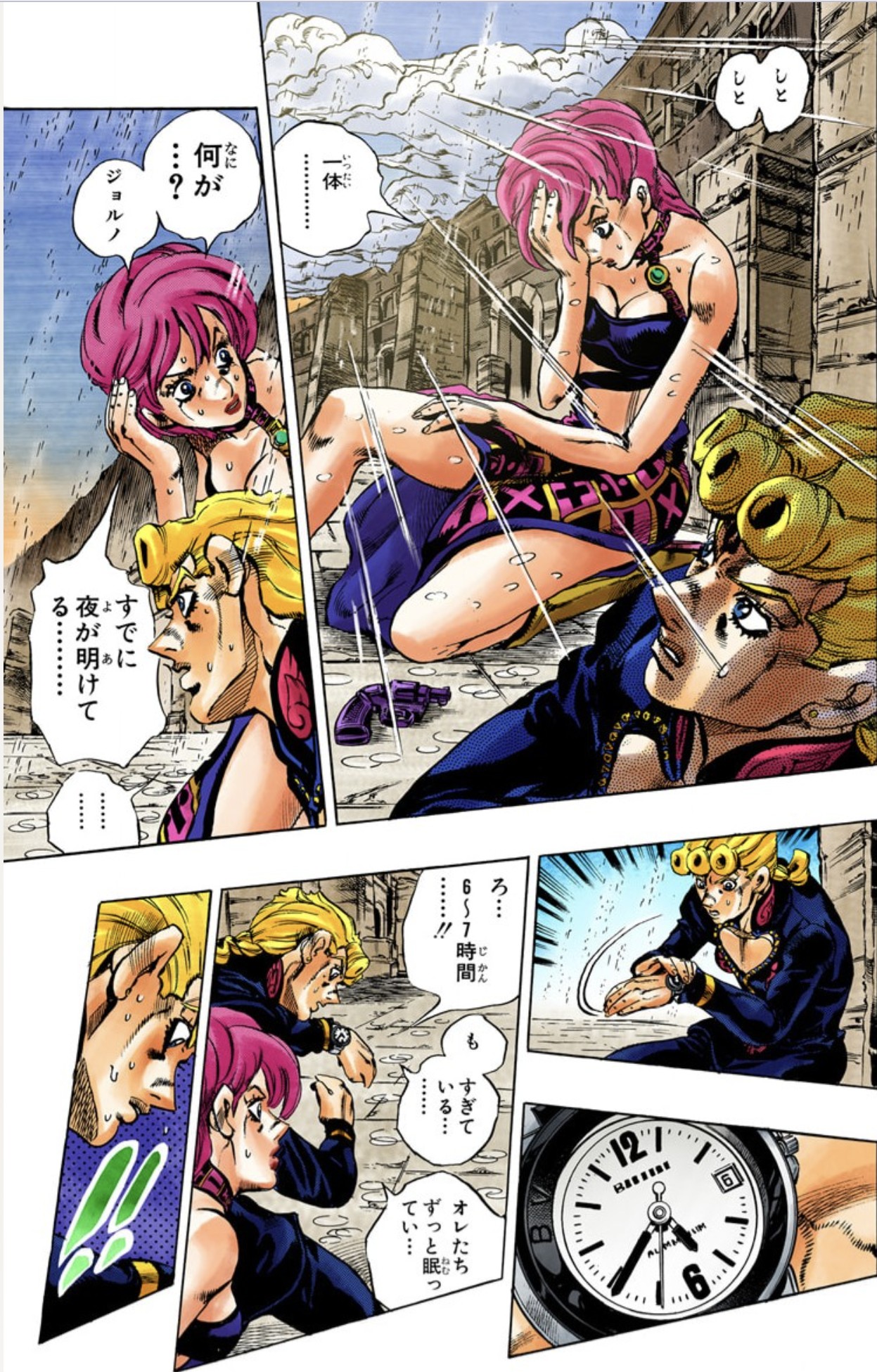
Keep the surrounding page, not just the crop. It can establish who is wearing the watch, what is happening and which edition you are looking at. In Golden Wind chapter 572, Narancia is occupying Giorno’s body. Labeling the close-up simply “Narancia’s watch” would confuse the person checking the time with the owner of the wrist.
Record the chapter and edition when you can verify them. The first year of a series is a poor substitute for the publication date of a panel drawn years later. Color editions also need their own labels: a later coloring does not establish which dial color the original black-and-white drawing intended.
Describe the features before naming a reference
For Giorno’s watch, start with the large 12 and 6, baton markers, date at three and broad, lettered bezel. These support a Bvlgari Aluminium comparison. They do not yield the case diameter. Measuring a drawing against a fictional wrist would introduce precision the evidence does not contain.
Bracelets can be useful when the dial is small. Note the number and shape of the links, the attachment to the case and whether the pattern stays consistent between panels. If a later panel simplifies the bracelet, keep the clearer view as evidence and record the inconsistency.
Separate omissions from contradictions
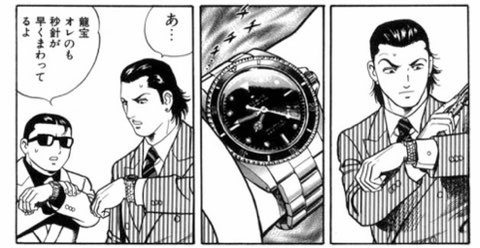
The proposed Submariner in Shizukanaru Don has no visible date window. That supports a no-date comparison. Its tiny dial also lacks legible chronometer text, but this is weaker evidence: lettering is easy to drop when a watch occupies a few centimeters of page.
The same caution applies to logos. A blank patch of dial can be a simplification. An altered word can be a fictional substitute. Neither gives permission to fill in the missing reference number.
Check chronology and independent evidence
A proposed model must have existed when it could have served as a drawing reference. Jotaro’s late watch in Stone Ocean resembles a dive watch, but calling it an Aquaracer conflicts with the line’s 2004 introduction, after the original manga ended. A later resemblance is useful as a comparison, not proof of an earlier source.
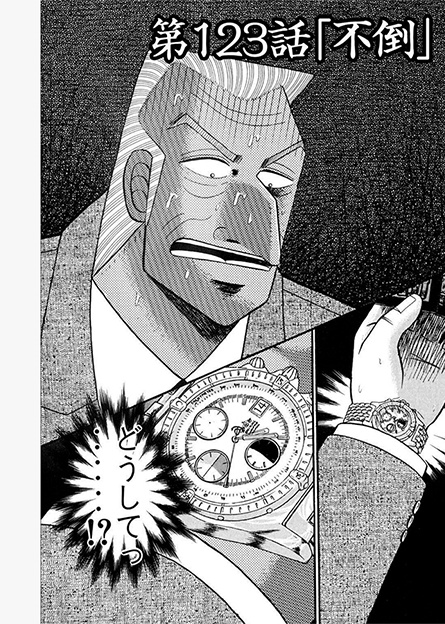
Fukumoto has named the Chronomat 13050 behind Tonegawa’s watch in Kaiji. That creator attribution resolves a reference the panel alone could not establish.

A finished identification should let the next reader retrace it: the scene, the visible features, the proposed model and the evidence that narrows it. When the caseback or dial variant remains unknown, leave that part open.
Browse the catalog: Watches in manga.