
Fake Pateks, Double Casios and the Engineering of Movie Watch Props
More actions

| Prop method | Example | Production compromise |
|---|---|---|
| Combine production watches | Twin Casio F-100 carrier, Alien | Both modules remain recognizable; the assembly becomes fictional equipment |
| Build repeatable replicas | Calatrava-style watch, Drive | Five or six replicas for filming and stunt work |
| Remove the movement | Rolex 5513 saw, Live and Let Die | The case becomes space for pneumatic effects |
| Split functions across multiples | Red and blue BeLOWZERO props, Tenet | Fixed hands and practical displays require dozens of preset watches |
| Design a device from zero | Desert Watch, Dune: Part Two | Horological cues remain, but conventional time display disappears |
Two F-100s and a painted carrier
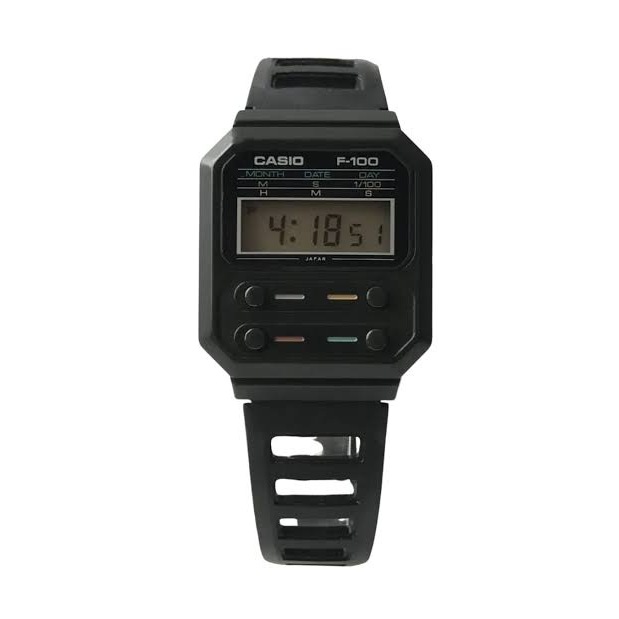
The late-1970s Casio F-100 already looked unfamiliar: four front-mounted pushers, bright functional color, a rectangular display, and Casio's early resin-case construction. Alien doubles the face rather than redesigning it. Ripley, Dallas, and other crew members wear paired modules on a wide black backing with a red outline around the upper unit.
The prop gains complexity without inventing a legible science-fiction display. Both modules still present normal segmented time, but the doubled layout reads as shipboard telemetry at medium-shot distance. The close view also preserves enough F-100 architecture for identification. Hodinkee's examination shows the modern replica problem: surviving F-100s are now too scarce to treat casually, so many reproductions substitute two modern A100 modules.

Drive: a Patek idea made expendable
The Drive Calatrava-style prop watch is often assigned a Patek Philippe name because the design borrows the Calatrava's round precious-metal case, small seconds, and minimal dial. It does not correspond to a production reference. Prop master Will Blount recalled choosing the Patek idea with Ryan Gosling, then using five or six replicas because the film's stunts and blood effects made a real watch impractical.
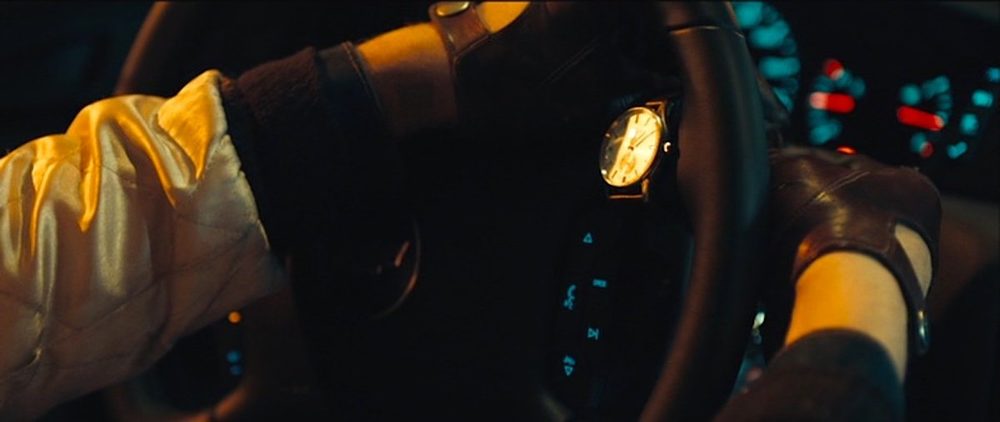
The replicas were built for filming and were never sold as Patek Philippe watches. Their swollen scale and conspicuous lume suit low-light photography better than a period reference 96 or modern 5196. The tick on the soundtrack is another fabrication: Foley artists supplied it. Blount's account to GQ describes the replicas and the added sound.
Live and Let Die: one reference, several effect watches
The Rolex Submariner 5513 props in Live and Let Die demonstrate why “the screen-used watch” can be a misleading singular. One close-up version placed red material beneath pierced dial markers to signal the fictional magnetic field. The saw version sacrificed the caliber entirely. Its empty case accommodated the mechanism that raised and spun a re-cut, toothed bezel.
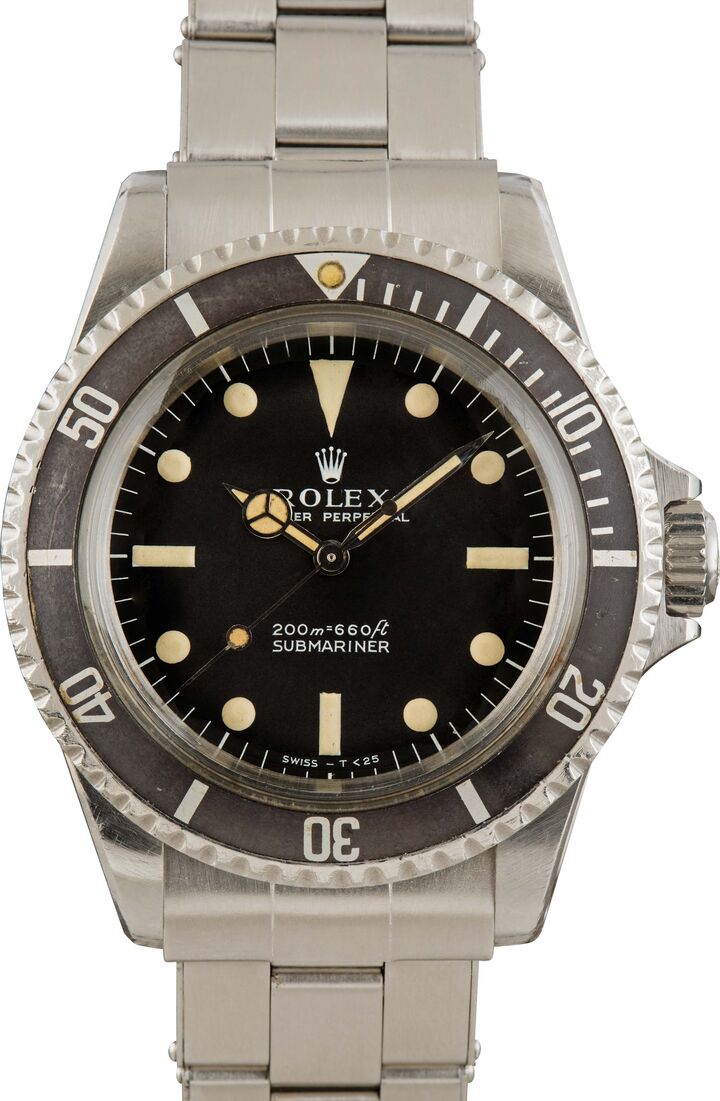
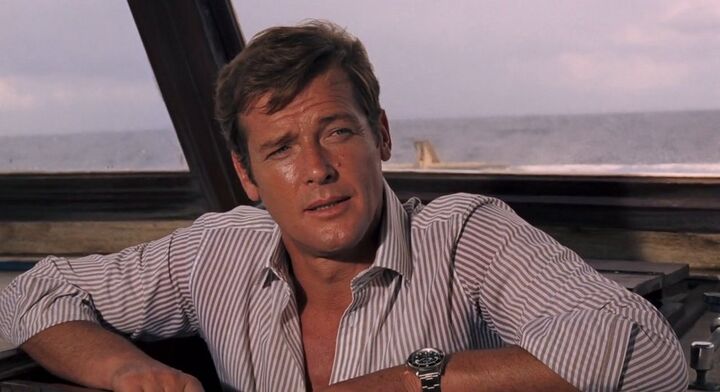
Christie's records art director Syd Cain's pneumatic solution: air blown through vanes raised the bezel to its working height and drove the rotation. The auction description also separates the saw prop from the red-dial magnetic close-up watch. A single fictional Q Branch object was therefore assembled on screen from mechanically incompatible physical props.
Tenet: eighty watches to fake one moving dial
The Hamilton Khaki BeLOWZERO props made for Tenet contain practical red or blue digital counts, but no timekeeping movement. The analog hands are fixed because the digital plate occupies the space where a conventional caliber and hand stack would sit. Production designer Nathan Crowley still wanted both kinds of display in camera.
Around 40 watches in each color were prepared with hands fixed at different positions, plus backups. The crew chose the unit whose handset matched the required shot, then a technician ran the countdown. The blue version carried its batteries inside; the more power-hungry red display used an external pack wired through the caseback.

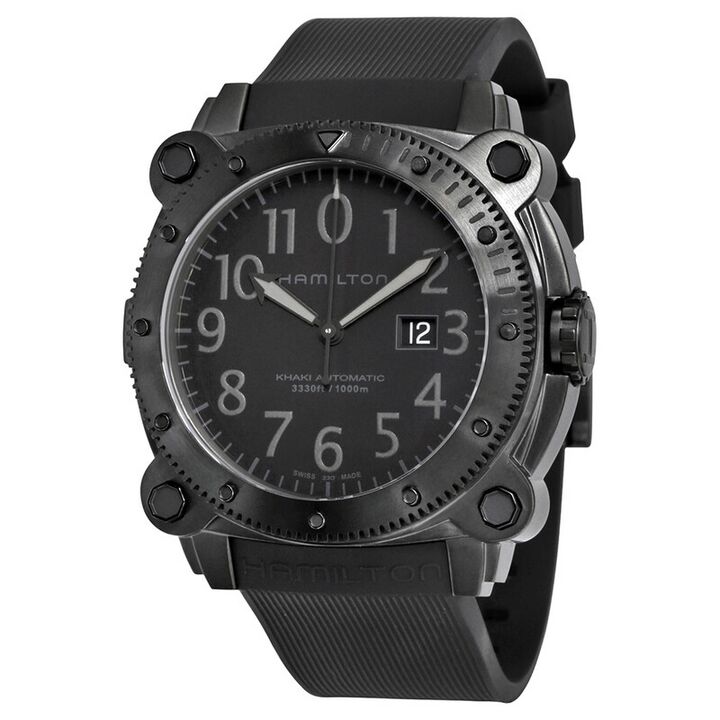
Hodinkee's hands-on report photographs the fixed hands, wiring and gaps around the display.
Dune: Part Two: abandon the watch case
The Hamilton Dune Desert Watch reverses the Alien method. Instead of making a recognizable watch stranger, Hamilton and prop master Doug Harlocker started with the fictional culture and kept only a watch's basic components: a display zone, protective case, side control, and strap. The asymmetrical shell, apparent fasteners, abrasions, and blue channel belong to Fremen material culture rather than a modified catalog model.
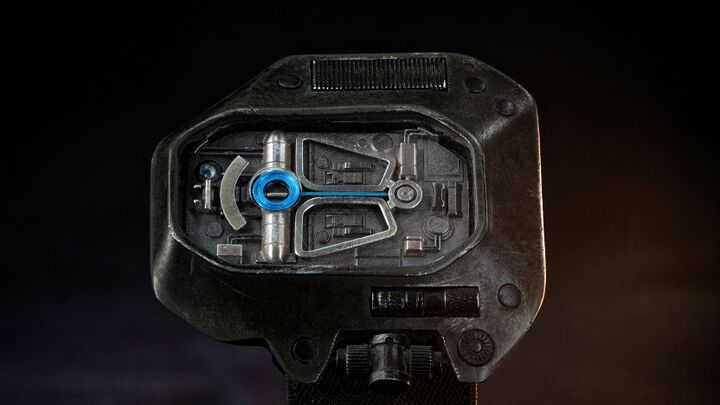
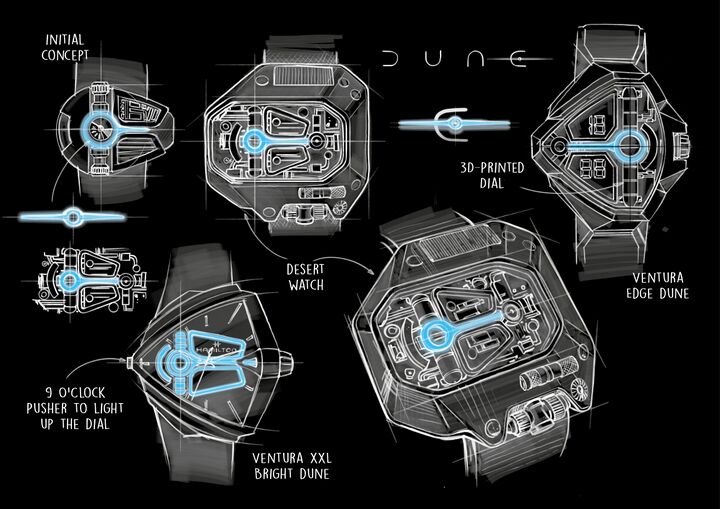
The two retail Venturas arrived afterward. Hamilton's project record calls the commercial watches “inspired by” the screen device.