
When the Watch Is Part of the Plot
More actions
| Film | Watch | Narrative job |
|---|---|---|
| Drive | Calatrava-style prop | Defines the five-minute contract and times the getaway |
| Pulp Fiction | Butch's gold pocket watch | Converts family memory into the decision that returns Butch to danger |
| Apollo 13 | Omega Speedmaster Professional | Times the manual course-correction burn |
| Interstellar | Hamilton Khaki Field Murph | Receives quantum data through the seconds hand |
| Live and Let Die | Rolex Submariner 5513 prop | Pulls objects magnetically and cuts Bond's restraints |
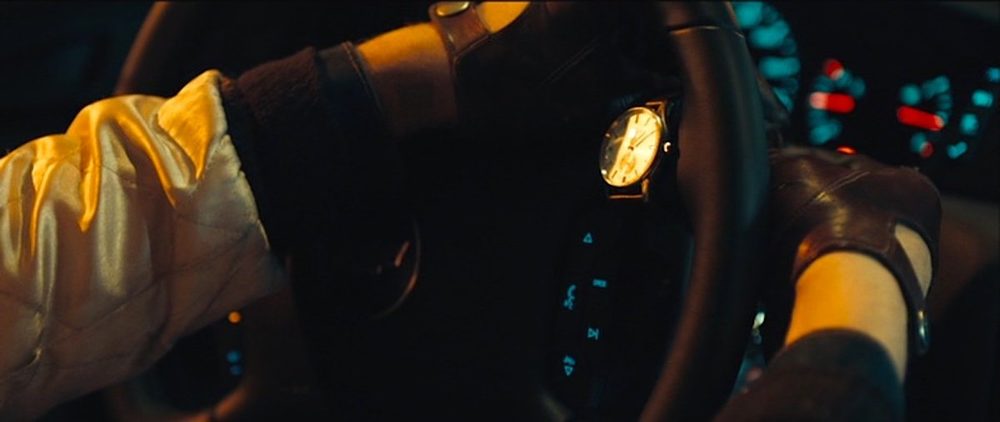
Drive: five minutes and a fabricated Patek
The watch in Drive resembles a large luminous Patek Philippe Calatrava, but it is not a production Patek reference. Prop master Will Blount and Ryan Gosling settled on a restrained, inherited-looking dress watch, then made five or six replicas because a real Patek would not have survived the stunt work. Blount also confirmed that the emphatic ticking was added by Foley artists. GQ's interview with Blount resolves both details.
A large luminous marker makes the dial readable on the steering wheel; the amplified tick turns elapsed time into part of the soundtrack.
Pulp Fiction: an heirloom valuable enough to alter the route
Butch's gold pocket watch in Pulp Fiction carries three generations of invented family history before Butch ever wears it. Captain Koons's monologue makes its survival grotesquely specific. Later, discovering that Fabienne left it behind sends Butch back to the apartment and into Vincent Vega's path.
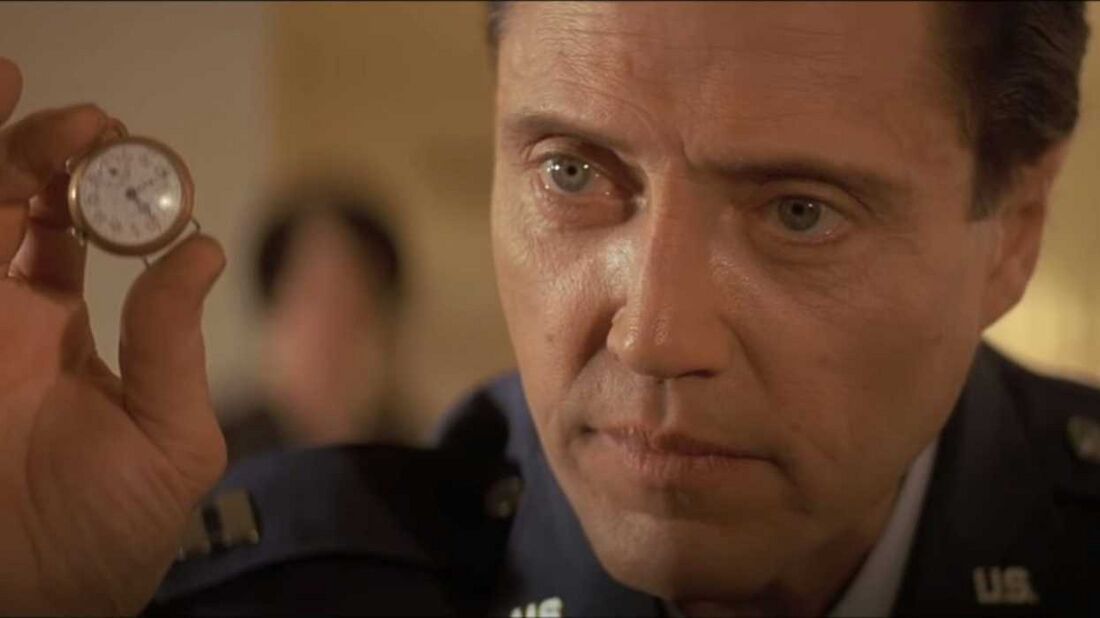
The prop's material value was modest. Prop master Jonathan R. Hodges recalled paying less than $50 for the wire-lug watch and roughly five dollars for the Speidel Twist-O-Flex requested by Bruce Willis. Only one was used. Hodges chose the early wristwatch form because its welded wire lugs looked plausibly close to a converted pocket watch, and because the case had to fit the monologue's notorious logistics. His Hodinkee interview documents the purchase and the choice of bracelet.
Apollo 13: the chronograph performs its historical job
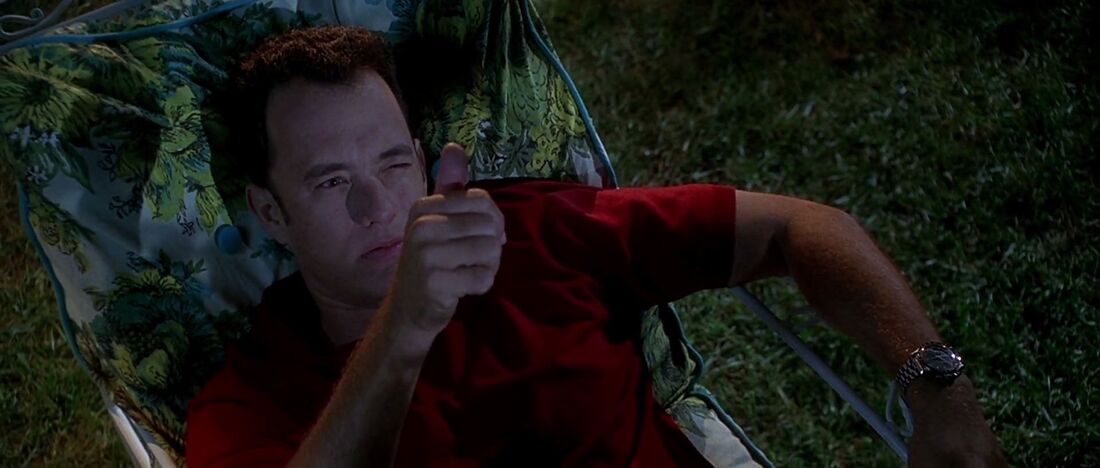
The Omega Speedmaster Professional sequence in Apollo 13 differs from the fictional devices around it. The watch dramatizes a real manual timing problem. With guidance equipment powered down, Jack Swigert uses the chronograph while the crew holds Earth in the lunar module's window and fires the descent engine for the course correction.
The film compresses mission procedure into a visible operation: pusher, sweep hand, verbal count, engine cutoff. The underlying 14-second burn occurred at 105:18 mission elapsed time. Fratello's reconstruction identifies Swigert's NASA-issued 105.012-66 and serial 69; NASA's mission history supplies the broader sequence of power conservation and course corrections.
Interstellar: the seconds hand becomes a telegraph
Interstellar asks an ordinary three-hand watch to carry information it was never designed to encode. Cooper leaves the custom Hamilton Khaki Field Murph with his daughter before departure. Decades later, from the tesseract, he manipulates its seconds hand to transmit quantum data in Morse code. Murph recognizes the hand's repeated deviations, writes down the sequence, and completes the equation.
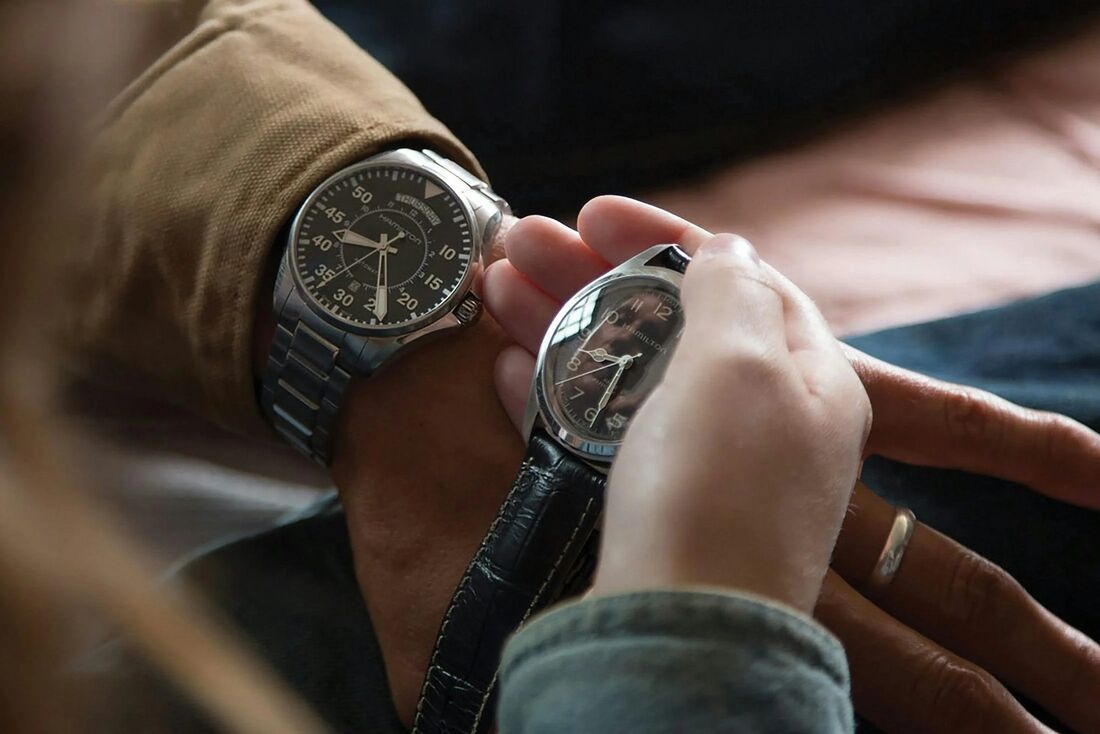
Prop master Ritchie Kremer’s team modified Hamilton’s watch so its hand could be operated by cable. (Hodinkee) The retail 42 mm Murph later printed “Eureka” in Morse on the seconds hand, a clue added after the film rather than a feature of the screen prop. The manufacturer's account distinguishes the retail inscription from the film prop.
Live and Let Die: remove the movement, save the hero
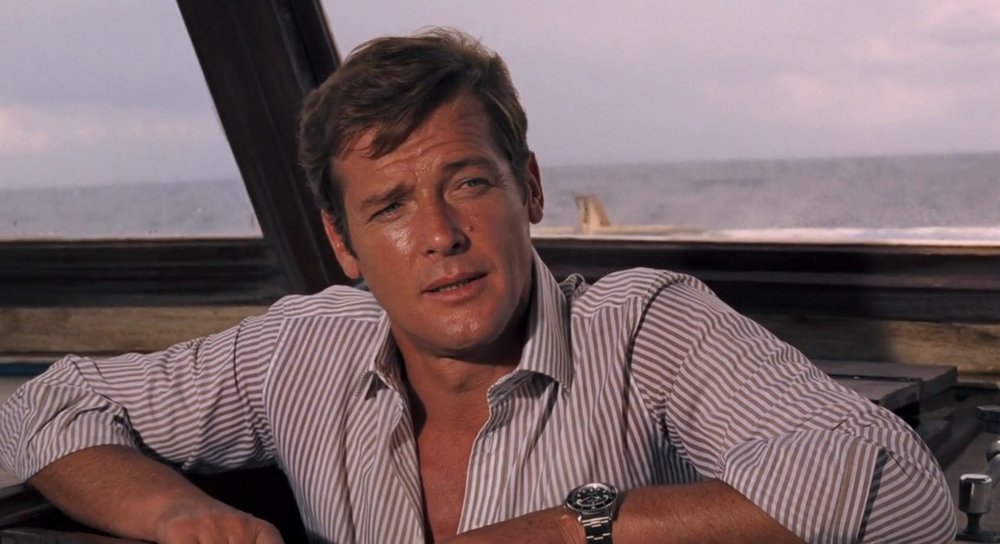
The Rolex Submariner 5513 in Live and Let Die does two impossible things. Its “hyper-intensified magnetic field” pulls a spoon across a table; its toothed bezel later cuts through the rope binding Bond's wrists. The second effect required a dedicated physical prop.
Christie's cataloged the 1972 reference 5513 with its movement removed, bezel re-cut into a sharp edge, and mechanism altered so the bezel could rise before spinning. Art director Syd Cain's design used compressed air directed through internal vanes. A separate close-up prop used pierced dial markers with a red insert to indicate the magnetic field. The auction record preserves the construction differences that disappear when both objects are described as “Bond's magnetic Rolex.”
Sources
- GQ: Ryan Gosling's Drive watch
- Hodinkee: The full story of the Pulp Fiction watch
- NASA: “Houston, We've Had a Problem”
- Hamilton: Making the Murph
- Christie's: Live and Let Die Rolex 5513 prop
Correction, 10 September 2026: prop master Ritchie Kremer’s team modified the Murph’s hand for cable operation; Hamilton supplied the watch.